


Deck the (Rental) Halls: Your Renter-Friendly Holiday Decorating Guide

John Wilds • November 1, 2026

How to make your home merry and bright, with nothing to patch in January.



The holidays are a wonderful time to make a rental feel like your home. A wreath on the door, lights in the window, a tree in the corner: none of it requires a single nail.


We put this guide together so you can go as festive as you like and still hand back walls, floors and fixtures in the same condition you found them. A home that is loved and looked after is good for you, good for your neighbors and good for the owner who provides it.


Start With a Lease Check

Before you buy anything or do any decorating, take a quick look at your lease and any community or HOA rules.


They usually cover the things that matter most this time of year: what can go on exterior walls, railings and balconies, whether candles are allowed, and any quiet hours for outdoor displays. If something is unclear, send us a message.


We would much rather answer a question in November than sort it out in January.


Hang It All Without a Single Nail


Most holiday decor is light, which makes it perfect for removable hardware.


Adhesive hooks and strips. Check the weight rating on the package and press firmly for 30 seconds. They hold best on clean, smooth, painted surfaces and are not designed for wallpaper or textured walls.

Over-the-door wreath hangers. A wreath goes up in ten seconds and the door stays untouched. Add a small felt pad behind the hanger to protect the paint.

Tension rods. Set one inside a window frame or doorway to hang garland, ornaments or a curtain of lights.

Removable putty and washi tape. Ideal for holiday cards, paper snowflakes and kids' artwork.

What you already have. Drape garland along the mantel, shelves, the top of a bookcase or a stair rail. Fill a bowl or vase with ornaments for an instant centerpiece.


When the season is over, remove adhesive strips the way the package describes: hold the hook, then pull the tab slowly straight down along the wall, not out toward you. That is what keeps the paint in place.

Light It Up Safely

  • Choose LED lights. They stay cool to the touch and use far less electricity.
  • Look for a UL or ETL safety label, and use outdoor-rated lights and cords for anything outside.
  • Plug into a power strip with a built-in breaker, and avoid connecting one power strip to another.
  • Keep cords out from under rugs and away from doors and windows that could pinch them.
  • Put your lights on a timer or smart plug so they turn off at bedtime and whenever you are out.
  • Swap real candles for flameless ones. You get the same glow with nothing to worry about.


The start of the season is also a good moment to press the test button on your smoke and carbon monoxide alarms. If one does not respond, submit a maintenance request and we will take care of it.



Choosing and Caring for Your Tree

  • Real trees: ask the lot for a fresh cut at the base and check the water every day. A well-watered tree stays greener, drops fewer needles and is much safer.
  • Placement: keep any tree at least three feet from heaters, fireplaces and other heat sources, and make sure it does not block a doorway or hallway.
  • Protect the floor: a waterproof tree mat or tray under the stand keeps water and sap off carpet and hardwood.
  • Artificial trees: look for a "flame resistant" label, and consider a slim or tabletop size for smaller spaces.
  • After the holidays: check your trash hauler's tree recycling schedule or drop-off sites. Remove every ornament, light and the stand first.


Balconies, Patios and Front Doors

Outdoor decorating is where building and HOA rules come into play most often, so confirm what is allowed before you start.

  • Use plastic light clips, zip ties or removable hooks. Skip nails, staples and screws in stucco, siding, trim or railings.
  • Keep walkways, stairs and shared entries clear so neighbors and delivery drivers can pass easily.
  • Bring in or secure lightweight decorations on windy days.
  • Be a good neighbor with brightness, sound and timing. A timer helps here, too.


January Take-Down Checklist

  1. Remove adhesive hooks slowly, pulling the tab straight down.
  2. Wipe away any leftover putty or tape residue with a soft, damp cloth.
  3. Vacuum needles and glitter before they settle into carpet.
  4. Coil lights loosely and store them with your hooks and clips for next year.
  5. Notice something that needs attention, such as an outlet that stopped working or a mark you are unsure about? Submit a maintenance request through your online portal and we will handle it.


Shop the Guide

Here are a few renter-friendly picks for the tips above. Check the weight rating and your lease before you buy.


Command Medium Hooks (20-pack)

Removable adhesive hooks that hold up to 3 pounds each, for garland, stockings and lightweight decor.


Haute Decor Adjustable Wreath Hanger

Hangs over the door with no screws or nails.


Spring Tension Rods

No-drill rods for window frames and doorways.


JinBest 100 LED Warm White String Lights

UL-listed LEDs for indoor or outdoor use.


Brightown Outdoor Light Timer

Turns lights on at dusk and off after a set number of hours.


Amagic Flameless LED Candles (set of 3)

Battery-operated, with a remote and timer.


Drymate Christmas Tree Stand Mat

Absorbent, waterproof mat that protects floors under the tree.


Command Outdoor Light Clips

Weather-resistant clips for hanging string lights without nails or staples.


Product links are provided for convenience. Tranquility Property Management is not affiliated with these brands and does not earn a commission.


Need Inspiration? Head to the Village

If you want ideas, or just a dose of holiday cheer, La Mesa's Holiday in the Village returns to La Mesa Boulevard on Saturday, December 12, from noon to 9 p.m. It is one of our favorite days of the year in the neighborhood we call home.

Frequently Asked Questions


How can I hang holiday decorations in a rental without damaging the walls?

Use removable adhesive hooks and strips, over-the-door hangers, tension rods and removable putty. Check the weight rating, apply to clean, smooth surfaces, and remove strips by pulling the tab slowly straight down.


Can I put holiday lights on my balcony or patio?

In many homes, yes, but it depends on your lease and any HOA or building rules. Use outdoor-rated lights, attach them with clips or ties instead of nails or staples, and keep shared walkways clear. If you are unsure, ask your property manager first.


Are real Christmas trees allowed in rental homes?

Most leases allow them. Keep the tree watered daily, place it at least three feet from any heat source, protect the floor with a tree mat, and recycle it promptly after the holidays.


What should I do if something breaks or stops working while I am decorating?

Submit a maintenance request through your online portal as soon as you notice it. Reporting small issues early keeps your home safe and makes repairs quicker.
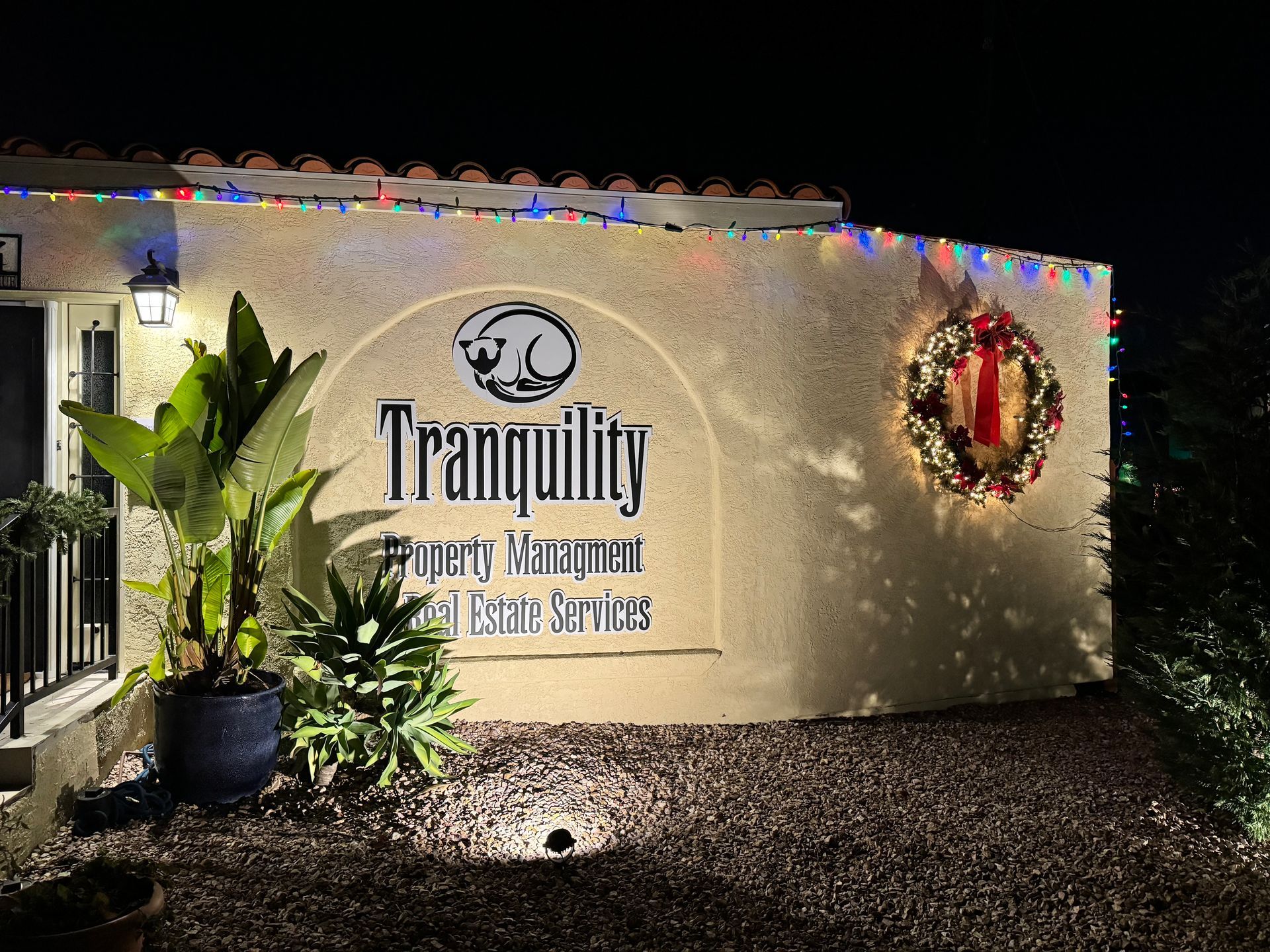

From all of us at Tranquility Property Management, we wish you a warm, bright and happy holiday season!


Questions about what is allowed at your home? Contact our team and we will be glad to help.

Search

Follow Us

By Aaron Duggan • November 16, 2026
California's Library Parks Pass is now written into state law. Learn how to check out free day-use parking for 200+ state parks with a San Diego library card, plus parks near La Mesa to visit.
By Aaron Duggan • November 8, 2026
Tranquility Property Management owner Aaron Duggan on why he is proud to run a California company, and what that means for owners, tenants, employees and La Mesa.
Best Property Manager in San Diego
By Aaron Duggan • September 18, 2026
When a tenant owes you money, offering them more money to move out can feel backward. You’ve already missed rent payments. The mortgage, insurance, and other expenses haven’t stopped. Now someone is suggesting you write another check? It’s an understandable reaction. But when a tenancy is no longer working, a voluntary move-out agreement, often called “cash for keys,” may help limit further losses. The question is what each available option is likely to cost from this point forward. In some situations, paying for a properly handled move-out can be less expensive than continuing a lengthy dispute. What Is Cash for Keys in a Rental Property? Cash for keys generally means an owner offers money or other agreed consideration in exchange for a tenant voluntarily moving out and returning possession of the property. The terms may include a payment, an agreement about unpaid rent, or a combination of both. Those details need to be clearly documented and legally appropriate for the situation. For an owner, the potential benefit is a more predictable path toward getting the property back. For a tenant, financial assistance may make it possible to cover moving expenses and leave a situation they can no longer sustain. Both parties need to understand what they’re agreeing to. A tenant can decline a voluntary offer. Why Would You Pay a Tenant Who Already Owes Rent? Because the unpaid balance and the cost of resolving the tenancy are two different parts of the decision. The balance already owed matters. But continuing a dispute can add more unpaid rent, legal expenses, and time without resolving the original debt. Owners understandably want accountability. They also need to protect the property’s future income. Consider a rental with monthly rent of $3,000. If another two months pass without payment, that adds $6,000 to the unpaid balance before legal expenses or turnover costs. That doesn’t mean an owner should offer $6,000, or that a legal process will take two months. It simply shows why the cost of waiting belongs in the conversation. A proposed agreement needs to be evaluated against realistic alternatives, including the likelihood of collecting money owed. The largest balance on paper doesn’t necessarily produce the best financial outcome. Is Cash for Keys Cheaper Than Eviction? It can be, but there’s no universal answer. The comparison depends on the property, the legal grounds involved, how far the dispute has progressed, and whether both parties are willing and able to follow through. Before deciding, owners should consider: Additional unpaid rent: How much more could accrue while the situation stays unresolved? Legal expenses: What does the attorney estimate for the available options? The agreement’s full cost: Include payment, any debt being forgiven, and required assistance. Timing and uncertainty: How realistic is the proposed move-out date? Turnover and leasing: What work will still be needed before the property can produce income again? Some expenses exist either way. A voluntary agreement doesn’t eliminate cleaning, necessary repairs, or the time it takes to find a new tenant. As we discussed in our article on how professional property management can save landlords money , avoiding additional losses is key to protecting rental income. When Might a Voluntary Move-Out Agreement Make Sense? It may be worth exploring when a tenant cannot catch up on rent, wants to move, and faces practical barriers to doing so. It can also help when both sides prefer a negotiated resolution over continued conflict. The agreement must still be achievable. A payment alone won’t solve an unrealistic moving timeline or a disagreement about who remains in the home. If the tenant doesn’t want to leave, the proposed terms don’t make financial sense, or urgent safety concerns exist, another approach may be necessary. An attorney can help evaluate the lawful options. Cash for keys is one possible tool. It shouldn’t be the automatic response to every difficult tenancy. Is Cash for Keys Legal in San Diego? Voluntary buyout agreements can be lawful, but requirements depend on the property’s location and circumstances. For covered properties in the City of San Diego , the tenant protection ordinance requires disclosures before making a buyout offer, written agreements, and specific notices. Translation requirements may apply. It also prohibits retaliation for refusing an offer and sets buyout amounts in relation to relocation assistance. The ordinance excludes agreements settling a pending unlawful detainer case from its definition of a buyout agreement. That distinction requires legal review; it is not a reason to file a case to avoid buyout requirements. See San Diego’s Residential Tenant Protections, including Section 98.0707 . These are city rules, not rules that automatically apply throughout San Diego County. An owner in La Mesa should not assume the same local ordinance governs their property. Have a California landlord-tenant attorney review the situation before making an offer , including any required relocation assistance. Voluntary payments and legally required relocation assistance are not interchangeable.  What Should a Cash for Keys Agreement Address? A properly prepared agreement should clearly state the payment amount, the move-out date, and what happens to any unresolved obligations. Topics to review with an attorney include: Who must sign and which occupants are covered. The move-out date and how you will return possession. The payment amount, timing, and conditions. Whether unpaid rent is forgiven, reduced, or remains owed. How the security deposit will be accounted for under applicable law. Any required disclosures, translations, or other local protections. Don’t assume that paying someone to leave automatically settles every financial issue. Likewise, don't treat the security deposit as an informal bargaining fund. If the tenant doesn’t leave as agreed, the owner still must follow the lawful process. Changing locks, shutting off utilities, or removing belongings to force a move-out is illegal. The California Attorney General’s landlord-tenant guidance explains these protections. How Can Property Management Help Owners Make the Decision? A difficult tenancy can make every decision feel personal. A property manager can help organize the facts: payment history, communication, ongoing costs, and what the property will need after possession is lawfully returned. Those facts give the owner and attorney a clearer basis for comparing options. This article provides general information, not legal advice. Buyout and eviction requirements depend on the property and circumstances
The Best San Diego Property Management
By John Wilds • September 1, 2026
The Best San Diego Property Management
By Aaron Duggan • August 10, 2026
We were recently referred to the parents of an existing client. They told us their current property manager had experienced some difficulty completing a unit turnover and filling the vacancy. It had taken two year . No, that’s not a typo. Two. Years. A vacant rental property is already costly. When maintenance, communication and leasing delays begin stacking up, an ordinary turnover can quickly become a much larger problem. Here’s what we were able to tell them about how Tranquility does business.

Share this post

Recent Posts

By Aaron Duggan • November 16, 2026
California's Library Parks Pass is now written into state law. Learn how to check out free day-use parking for 200+ state parks with a San Diego library card, plus parks near La Mesa to visit.
By Aaron Duggan • November 8, 2026
Tranquility Property Management owner Aaron Duggan on why he is proud to run a California company, and what that means for owners, tenants, employees and La Mesa.
Best Property Manager in San Diego
By Aaron Duggan • September 18, 2026
When a tenant owes you money, offering them more money to move out can feel backward. You’ve already missed rent payments. The mortgage, insurance, and other expenses haven’t stopped. Now someone is suggesting you write another check? It’s an understandable reaction. But when a tenancy is no longer working, a voluntary move-out agreement, often called “cash for keys,” may help limit further losses. The question is what each available option is likely to cost from this point forward. In some situations, paying for a properly handled move-out can be less expensive than continuing a lengthy dispute. What Is Cash for Keys in a Rental Property? Cash for keys generally means an owner offers money or other agreed consideration in exchange for a tenant voluntarily moving out and returning possession of the property. The terms may include a payment, an agreement about unpaid rent, or a combination of both. Those details need to be clearly documented and legally appropriate for the situation. For an owner, the potential benefit is a more predictable path toward getting the property back. For a tenant, financial assistance may make it possible to cover moving expenses and leave a situation they can no longer sustain. Both parties need to understand what they’re agreeing to. A tenant can decline a voluntary offer. Why Would You Pay a Tenant Who Already Owes Rent? Because the unpaid balance and the cost of resolving the tenancy are two different parts of the decision. The balance already owed matters. But continuing a dispute can add more unpaid rent, legal expenses, and time without resolving the original debt. Owners understandably want accountability. They also need to protect the property’s future income. Consider a rental with monthly rent of $3,000. If another two months pass without payment, that adds $6,000 to the unpaid balance before legal expenses or turnover costs. That doesn’t mean an owner should offer $6,000, or that a legal process will take two months. It simply shows why the cost of waiting belongs in the conversation. A proposed agreement needs to be evaluated against realistic alternatives, including the likelihood of collecting money owed. The largest balance on paper doesn’t necessarily produce the best financial outcome. Is Cash for Keys Cheaper Than Eviction? It can be, but there’s no universal answer. The comparison depends on the property, the legal grounds involved, how far the dispute has progressed, and whether both parties are willing and able to follow through. Before deciding, owners should consider: Additional unpaid rent: How much more could accrue while the situation stays unresolved? Legal expenses: What does the attorney estimate for the available options? The agreement’s full cost: Include payment, any debt being forgiven, and required assistance. Timing and uncertainty: How realistic is the proposed move-out date? Turnover and leasing: What work will still be needed before the property can produce income again? Some expenses exist either way. A voluntary agreement doesn’t eliminate cleaning, necessary repairs, or the time it takes to find a new tenant. As we discussed in our article on how professional property management can save landlords money , avoiding additional losses is key to protecting rental income. When Might a Voluntary Move-Out Agreement Make Sense? It may be worth exploring when a tenant cannot catch up on rent, wants to move, and faces practical barriers to doing so. It can also help when both sides prefer a negotiated resolution over continued conflict. The agreement must still be achievable. A payment alone won’t solve an unrealistic moving timeline or a disagreement about who remains in the home. If the tenant doesn’t want to leave, the proposed terms don’t make financial sense, or urgent safety concerns exist, another approach may be necessary. An attorney can help evaluate the lawful options. Cash for keys is one possible tool. It shouldn’t be the automatic response to every difficult tenancy. Is Cash for Keys Legal in San Diego? Voluntary buyout agreements can be lawful, but requirements depend on the property’s location and circumstances. For covered properties in the City of San Diego , the tenant protection ordinance requires disclosures before making a buyout offer, written agreements, and specific notices. Translation requirements may apply. It also prohibits retaliation for refusing an offer and sets buyout amounts in relation to relocation assistance. The ordinance excludes agreements settling a pending unlawful detainer case from its definition of a buyout agreement. That distinction requires legal review; it is not a reason to file a case to avoid buyout requirements. See San Diego’s Residential Tenant Protections, including Section 98.0707 . These are city rules, not rules that automatically apply throughout San Diego County. An owner in La Mesa should not assume the same local ordinance governs their property. Have a California landlord-tenant attorney review the situation before making an offer , including any required relocation assistance. Voluntary payments and legally required relocation assistance are not interchangeable.  What Should a Cash for Keys Agreement Address? A properly prepared agreement should clearly state the payment amount, the move-out date, and what happens to any unresolved obligations. Topics to review with an attorney include: Who must sign and which occupants are covered. The move-out date and how you will return possession. The payment amount, timing, and conditions. Whether unpaid rent is forgiven, reduced, or remains owed. How the security deposit will be accounted for under applicable law. Any required disclosures, translations, or other local protections. Don’t assume that paying someone to leave automatically settles every financial issue. Likewise, don't treat the security deposit as an informal bargaining fund. If the tenant doesn’t leave as agreed, the owner still must follow the lawful process. Changing locks, shutting off utilities, or removing belongings to force a move-out is illegal. The California Attorney General’s landlord-tenant guidance explains these protections. How Can Property Management Help Owners Make the Decision? A difficult tenancy can make every decision feel personal. A property manager can help organize the facts: payment history, communication, ongoing costs, and what the property will need after possession is lawfully returned. Those facts give the owner and attorney a clearer basis for comparing options. This article provides general information, not legal advice. Buyout and eviction requirements depend on the property and circumstances
Show More